
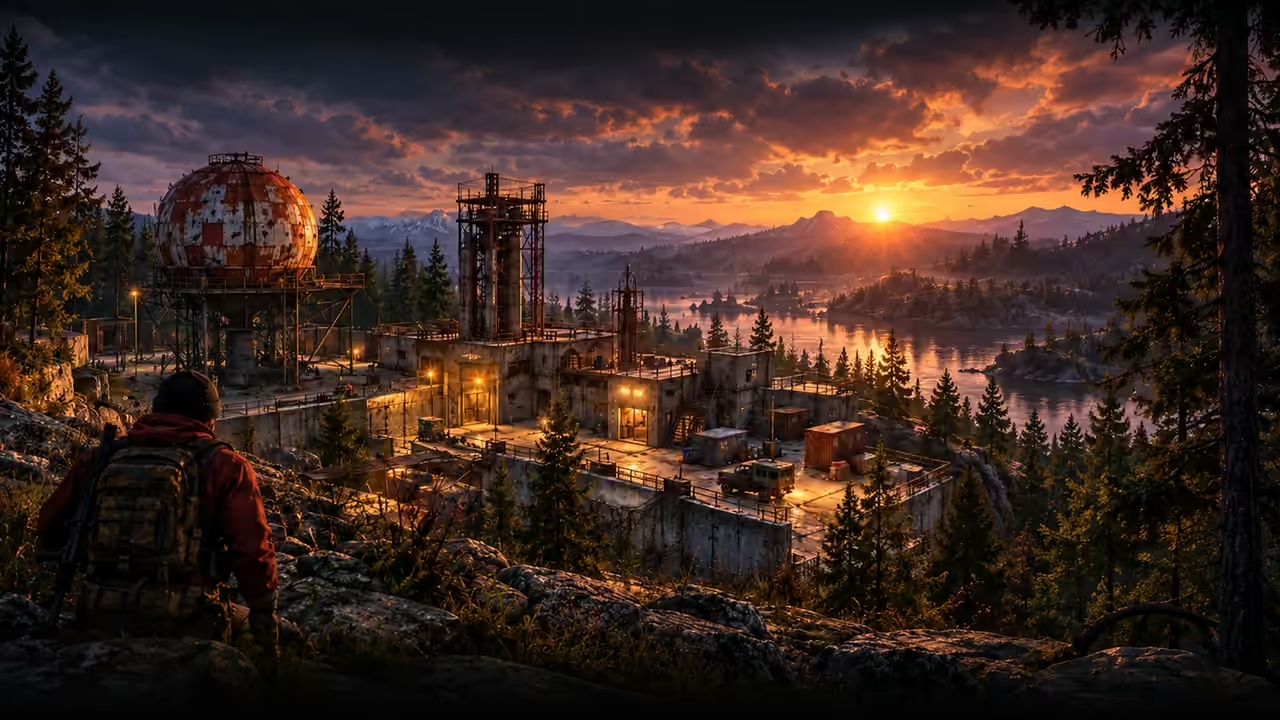
The view changes what the competition rewards
Three teams are building small harbour shelters. One uses the back wall to hide a second entrance. Another is waiting until the final minutes to place its best detail. If the public camera makes a complete pass through every plot while work is underway, teams can learn from each other before judging opens. An audience view that feels generous to spectators can quietly change the rules the builders thought they were playing by.
Decide what viewers should get at each stage. During building, show the landscape and the tools available to everyone, or keep the camera on a shared demonstration plot. During judging, use a private tour if judges need to see unfinished areas or to ask builders questions. The public tour can cover the completed entries after voting closes.
Rehearse the same view the audience will receive
Pick a simple route along the event area before the contest. Facepunch documents a free camera for administrators, with the ability to save and recall a view. A fixed outside view of each build makes it easier to give every team similar exposure. It also gives the camera operator a known view to return to if the stream leaves the event area.
Have one person watch the output as a viewer who cannot see the production controls or staff chat. Start at the demonstration plot and move through the route. Ask the helper what can be read on screen, whether any in-progress entry or unrelated base appears, and whether voice or overlay text carries details outside the event. If the public is supposed to see only the demonstration plot before judging, that is exactly what the helper should see.
Keep the camera operator out of the scoring decision
Give the operator a short route and a clear cue for when the finished entries can be shown. Let judges use their own notes for scoring. A livestream angle can hide the steps that make one entrance usable or make a large decoration look more important than it is. Judges should inspect the same parts of every build, even when those details are difficult to show on camera.
Tell builders what will be shown before they start. For example, “We will show the harbour and demonstration plot while you build. After judging, we will tour the contest plots from the docks.” When a team asks to show an extra room, apply the same choice to other teams. If there is only one volunteer to judge and run the camera, postpone the public tour until after scores are recorded.
Check the recording before you share it
A public recording should show the entries and the reason the event was fun. Review the saved clip from the perspective of someone who was never there. Check the beginning and end as well as the intended feature. Facepunch describes player names and account identifiers that a Rust demo can retain. For a community recap, sharing a reviewed video excerpt gives you control over the view you release.
If the recording includes a private conversation or a neighbouring build you did not mean to show, cut that part before posting. If the view cannot be made fair while the contest runs, use the finished tour as the public event. Spectators still get a good look at the builds and competitors can work without watching an audience feed for clues.